Hugie Bunny: A Playful Display Font for Handmade Creators
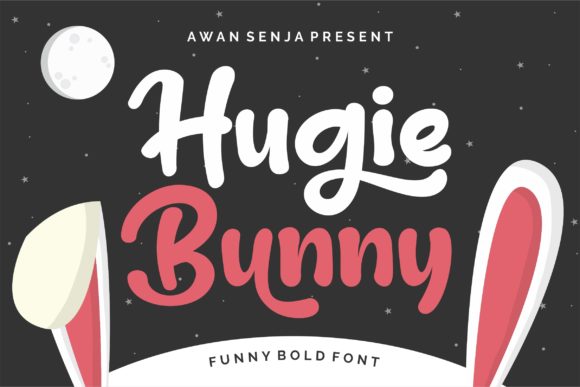
There’s that moment—right after you’ve poured your third candle of the week—when you hold up the blank kraft label and think, What font will make this feel like *mine*? Not just legible, not just cute, but unmistakably warm, inviting, and full of personality. That’s when I opened my font folder and clicked on Hugie Bunny. Instantly, the thick, bouncy letters felt like a hug in typeface form—sweet, cartoonish, and bursting with handmade charm.
Hugie Bunny is a display font built for impact. Its generous letterforms, rounded edges, and joyful rhythm give it a friendly, approachable energy—like a cheerful friend waving from across the market booth. It’s not subtle. It’s not minimalist. It’s designed to stand out on packaging, pop on digital previews, and bring instant character to any product where emotion and personality matter most.
I started with candle labels—simple 2” x 3” kraft stickers. Using Hugie Bunny for the scent name (“Lavender Honey,” “Cinnamon Toast,” “Rainy Day Books”) made each jar feel like a little story waiting to be unwrapped. The font’s weight holds up beautifully at 18–24pt on printed labels, and its clean outlines cut cleanly on my Cricut Maker—no jagged edges, no lost detail. For smaller stickers (think 1” round tags or mini gift seals), I kept text to one or two words—“Yes!”, “Yum!”, “Hello!”—and it stayed bold and legible without crowding.
It shines even brighter on greeting cards. I tested it for birthday invites—pairing “Happy Birthday!” in Hugie Bunny with a clean, airy sans serif (like Montserrat Light) for the date, time, and details. The contrast worked perfectly: playful headline, calm body text. Same goes for baby shower announcements, holiday cards, or “Thank You” notes tucked into boutique orders. Because Hugie Bunny is a display font—not meant for paragraphs—it’s ideal for titles, names, short slogans, and decorative phrases. Never force it into long blocks of text, but let it lead with warmth and whimsy.
Wedding stationery was another sweet spot. On a rustic wooden welcome sign, “We’re So Glad You’re Here!” in Hugie Bunny felt joyful without being childish. For printable wedding planner pages—like “Our First Dance Song” or “Guest Notes”—it added gentle personality next to neutral serif fonts (think Playfair Display or Lora). And on digital wall art prints? Absolutely. A single phrase like “Grow Wild” or “Home Is Where the Heart Is” in Hugie Bunny, centered on a soft linen-textured background, sells instantly in printables shops.
For tote bags and mugs, I used it sparingly—but intentionally. One line, centered, medium-large size. “Bake With Love” on an apron-printed canvas tote. “Good Vibes Only” on a matte ceramic mug. Because the font’s thickness and spacing translate so well to screen printing and sublimation, it stays crisp and cheerful—even after multiple washes or dishwasher cycles. Just avoid ultra-fine details like tiny serifs or delicate swashes—Hugie Bunny doesn’t include those, and that’s part of its strength. It’s straightforward, sturdy, and built for real-world making.
When designing seasonal products—think Easter egg tags, Halloween treat bags, or Christmas ornament labels—I leaned into its cartoonish sweetness without leaning into cliché. “Hoppy Easter!” instead of “Happy Easter!”—the playful spelling felt natural with Hugie Bunny’s bounce. Same for “Boo!” on a mini chalkboard sign or “Jingle All the Way!” on a printable gift tag. It doesn’t try to be elegant or vintage—it owns its fun, modern, handmade vibe.
Font pairing is where Hugie Bunny truly sings. I almost always pair it with something simple: a friendly sans serif for body text (Inter, Poppins, or Open Sans), a gentle script for names or accents (like Pacifico or Dancing Script—used *very* sparingly), or a quiet serif for contrast in invitations or planner kits. Avoid pairing it with other heavy display fonts—that’s visual noise. Let Hugie Bunny be the star, supported by calm, readable companions.
Before using Hugie Bunny commercially—whether on physical goods, SVG files, or digital downloads—I double-checked the license. It includes standard OTF and TTF files, basic Latin character support (perfect for English-language shop labels and printables), and clear commercial use rights. No hidden restrictions for Etsy sellers, craft fairs, or small-batch makers. I also scanned for alternates or ligatures—there aren’t many (and that’s fine), which keeps design decisions quick and consistent across product lines.
Readability matters everywhere: on mockup previews for listing images, on tiny sticker sheets, on curved mug surfaces, and especially when cutting vinyl or heat transfer. Hugie Bunny’s open counters (the enclosed spaces inside letters like ‘e’, ‘a’, and ‘o’) stay clear at small sizes, and its generous x-height means even 14pt text feels present—not fragile. For social media graphics or web banners, it scales beautifully—no pixelation, no awkward kerning gaps.
Most importantly, Hugie Bunny helps tell your story before a customer reads a single word. It says, “This was made with care—and a little joy.” Whether it’s stitched onto a tea towel, stamped on a soap bar, or glowing on a Canva template preview, it adds that intangible lift: the feeling that your product isn’t just well-made—it’s *welcoming*. And in a world of fast-scrolling feeds and crowded marketplaces, that kind of emotional resonance? That’s what turns browsers into buyers, and buyers into repeat fans.
So next time you’re choosing type—not just for function, but for feeling—reach for Hugie Bunny. Not as filler. Not as trend-chasing. But as a genuine, cheerful extension of your handmade voice.